
Pass the Squash,Tell the Truth
Candlelight, a plant-forward feast for every guest, a slow-smoked bird for those who crave one, and the real history behind the holiday, Moors included.

Every November the same picture comes out of storage: Pilgrims in buckled hats, a golden turkey glowing at the center of a long table. This year we set the picture down and went looking for the people who were actually there: an English letter writer, a Spanish priest, a French navigator, a castaway who walked across a continent, and a Wampanoag leader whose words were written down in 1675.
This year, we’re doing Thanksgiving the Cat House way. We feed everybody: the vegan niece, the vegetarian best friend, the uncle who swears he “doesn’t do vegetables,” and the guest who’s watching their heart. And every piece of history in this issue comes from those first-hand accounts, so you can read what they saw and decide for yourself what it means.
Pour something warm. Tap through the comic. Build your table. Smoke a bird or don’t. And if you’re reading this somewhere far from family, scroll to the end, because there’s a seat for you.

“Wait… Who Actually Wrote This Down?”
Madame Whiskerstein walks Kit, our very curious intern, through a century and a half, using only the words of people who were there. Tap the panel, use your arrow keys, or swipe.
The 1621 Feast, Told by the People Who Were There
Two men who lived through that autumn at Plymouth wrote about it. Edward Winslow described it in a letter to a friend in England dated December 11, 1621, printed in London the next year. William Bradford, the colony’s governor, described the same season in his own history around 1630. That is the whole written record from inside the colony, so here it is in their words.
Winslow: “Our harvest being gotten in, our governor sent four men on fowling.” Then came “many of the Indians coming amongst us, and amongst the rest their greatest king Massasoit, with some ninety men, whom for three days we entertained and feasted, and they went out and killed five deer, which they brought to the plantation and bestowed on our governor, and upon the captain and others.”
Bradford, on the same fall: “besides waterfowl there was great store of wild turkeys, of which they took many, besides venison.”
Edward Winslow, Plymouth, December 11, 1621
No Wampanoag letter from 1621 survives. The closest thing is the voice of Massasoit’s own son, Metacom, whom the English called Philip. In June 1675 he sat down with John Easton, deputy governor of Rhode Island, who wrote down what he said. Metacom told him that when the English first came, his father “was as a great man and the English as a little child,” and that his father “gave them corn and showed them how to plant.”
He also laid out his grievances: land “taken from them, for English would have English arbitrators”; that as “the English cattle and horses still increased,” they “could not keep their corn from being spoiled”; and that “they had been the first in doing good to the English, and the English the first in doing wrong.” Easton’s account goes on to record the beginning of the war that followed that summer.


Alix PurrHigh above the city, and still the best view in the room. Tap any photo to see it full screen.
The Moors Question: What’s Real, What’s Not
Scroll social media this time of year and you’ll run into a stack of “hidden history” posts about the Moors and Thanksgiving. Some aren’t in the paperwork at all. Others point toward a story that is real, and stranger than the meme. We only used accounts written by people who were there. Tap the blacked-out lines to declassify them.
The claim: “Thanksgiving secretly celebrates a massacre of Moors.”
We checked the two people who wrote about the 1621 harvest while they were living through it. Edward Winslow’s letter of December 11, 1621 and William Bradford’s history describe a harvest, men sent fowling, Massasoit arriving with some ninety men, five deer and wild turkeys. Neither one mentions Moors, Turks, Spain or a victory of any kind. That is what their pages say; what you make of the silence is up to you.
Finding #1: Estevanico, described by the men who traveled with him.
Álvar Núñez Cabeza de Vaca survived years as a castaway in the interior and published his account in Zamora, Spain, in 1542. Listing the four men who made it out alive, he wrote: “The fourth is named Estebanico; he is a black Arab and a native of Azamor.” In his Spanish: “negro alárabe, natural de Azamor.” Azamor is the Moroccan port of Azemmour. In August 1540 the commander Francisco Vázquez de Coronado wrote to the viceroy from Cíbola: “The death of the Negro is perfectly certain, because many of the things which he wore have been found.”
Finding #2: Squanto’s road to Plymouth ran through Málaga, Spain.
The Englishmen who knew the people involved wrote it down. John Smith, whose 1614 voyage Thomas Hunt sailed on, wrote in London in 1616 that Hunt “carried them with him to Malaga, and there for a little private gain sold” the men he had seized. The Plymouth colonists’ own journal for March 1621 calls Squanto “the only native of Patuxet, where we now inhabit, who was one of the twenty captives that by Hunt were carried away.” Governor Bradford added that Hunt “thought to sell them for slaves in Spain; but he got away for England.” Captain Thomas Dermer, who brought him home in 1619, wrote: “When I arrived at my [companion’s] native country (finding all dead).” Málaga itself had changed hands only 27 years before; Hernando del Pulgar, chronicler to Ferdinand and Isabella, wrote his account at the time of their 1487 siege of the city, then part of the Muslim kingdom of Granada.
Finding #3: A Spanish thanksgiving ceremony, 56 years before Plymouth.
Father Francisco López de Mendoza Grajales, the expedition’s chaplain, kept a memoir of the 1565 voyage. At St. Augustine on September 8, he wrote, “the general landed with many banners spread, to the sound of trumpets and salutes of artillery.” Mendoza went out to meet him with a cross, singing the hymn of thanksgiving, Te Deum laudamus, and the men “kneeled and embraced the cross.” Then: “A large number of Indians watched these proceedings and imitated all they saw done.” His memoir, in the translation we read, does not describe a shared meal, so neither do we.
Read it yourself: every line above comes from someone who was there, or from a chronicler writing at the time. Readable copies of each account are linked at the bottom of this page. Read them, compare them, and decide for yourself what they add up to.
Five Questions, Answered by People Who Were There
Who’s Coming to Dinner?
You don’t have to be vegan or vegetarian to cook for someone who is. The trick is a menu where most dishes work for everyone, so nobody’s stuck with a dinner roll and a side of guilt. Tap your guests below and watch the menu sort itself.
The Cat House Thanksgiving Menu
Everything below is built to please mixed company. Change the serving count and the quantities recalculate. Tap an ingredient to check it off while you shop or cook, which is something a printed page can’t do for you.
 VeganGF
Wild Rice & Cranberry Stuffed Acorn Squash
The vegan centerpiece that steals the show · 1 hr 10 min

Wild Rice & Cranberry Stuffed Acorn Squash
The vegan centerpiece that steals the show · 1 hr 10 min
- acorn squash, halved and seeded
- wild rice blend, cooked in veg broth
- dried cranberries
- toasted pecans, chopped
- shallot, minced
- celery ribs, diced
- fresh sage, chopped
- olive oil
- maple syrup
- Salt, pepper, pinch of cinnamon
- Heat oven to 400°F. Brush squash halves with half the oil, season, and roast cut-side down 30–35 min until tender.
- Sauté shallot and celery in remaining oil 5 min. Stir in rice, cranberries, pecans, sage and cinnamon.
- Flip squash, fill generously, drizzle with maple, and bake 10 more minutes.
- Finish with extra sage and a few pomegranate seeds if you’re feeling fancy.
Vegan
Mushroom-Lentil Loaf, Maple-Balsamic Glaze
Sliceable, savory, and the meat-eaters go back for seconds · 1 hr 20 min

Mushroom-Lentil Loaf, Maple-Balsamic Glaze
Sliceable, savory, and the meat-eaters go back for seconds · 1 hr 20 min
- cooked brown or green lentils
- cremini mushrooms, finely chopped
- yellow onion, diced
- carrots, grated
- garlic cloves
- rolled oats (GF if needed)
- ground flax + 5 tbsp water
- tamari
- thyme + 1 tsp smoked paprika
- Glaze: ketchup, 2 tbsp balsamic, 1 tbsp maple
- Mix flax and water and let it gel 10 min. Heat oven to 375°F and line a loaf pan.
- Sauté onion, mushrooms, carrot and garlic until the mushrooms release their liquid and it cooks off, about 10 min.
- Pulse half the lentils with the oats in a food processor. Combine everything and press into the pan.
- Spread the glaze on top and bake 45–50 min. Rest 15 min before slicing; it firms up as it cools.
VeganGF
Crispy Maple Brussels Sprouts with Pecans
Converts sprout haters every single year · 30 min

Crispy Maple Brussels Sprouts with Pecans
Converts sprout haters every single year · 30 min
- Brussels sprouts, halved
- olive oil
- maple syrup
- balsamic vinegar
- pecans
- Flaky salt, black pepper, chili flakes
- Roast sprouts cut-side down with oil, salt and pepper at 425°F for 20–25 min, until deeply browned.
- Toss with maple, balsamic and pecans and return to the oven for 3 minutes. Serve hot.
VeganGF
Garlic Cauliflower-Potato Mash & Mushroom Gravy
Creamy without the butter brick · 35 min

Garlic Cauliflower-Potato Mash & Mushroom Gravy
Creamy without the butter brick · 35 min
- Yukon Gold potatoes
- small head cauliflower
- head roasted garlic
- good olive oil
- unsweetened oat milk, warm
- Gravy: mushrooms, 2 cups veg broth, 2 tbsp cornstarch, 1 tbsp tamari, thyme
- Boil potatoes and cauliflower until very tender, then drain well. Mash with roasted garlic, oil and oat milk, and season.
- Gravy: brown the mushrooms hard, add broth and tamari, simmer 5 min, and thicken with cornstarch stirred into a splash of cold water.
Vegetarian
Butternut Three-Cheese Mac
For the vegetarians (and literally everyone else) · 45 min

Butternut Three-Cheese Mac
For the vegetarians (and literally everyone else) · 45 min
- cavatappi or elbows
- roasted butternut squash, puréed
- sharp cheddar, grated
- Gruyère, grated
- Parmesan (vegetarian rennet)
- milk
- Nutmeg, Dijon, panko and sage for the top
- Cook the pasta 2 min short of al dente.
- Warm the milk with the squash purée, then melt in the cheeses off the heat with a little Dijon and nutmeg. The squash replaces half the usual butter and flour roux.
- Fold in the pasta, top with panko and sage, and bake at 375°F for 20 min.
Heads up: many Parmesans use animal rennet, so check the label if your vegetarian guest is strict.
Vegan
Maple Pumpkin Pie, Coconut Whip
Silky and dairy-free, with no “vegan pie” disclaimer needed · 1 hr + chill

Maple Pumpkin Pie, Coconut Whip
Silky and dairy-free, with no “vegan pie” disclaimer needed · 1 hr + chill
- vegan pie crust (most store-bought are)
- pumpkin purée
- full-fat coconut milk
- maple syrup
- cornstarch
- pumpkin pie spice + 1 tsp vanilla
- Topping: chilled coconut cream whipped with a little maple
- Heat oven to 350°F. Blend all filling ingredients until smooth and pour into the crust.
- Bake 55–60 min until the edges set but the center still jiggles slightly.
- Cool completely, then chill at least 4 hours or overnight. Top with whip.

Low & Slow: A Healthier Smoked Turkey
If a bird is happening at your house, smoking it is one of the leaner ways to get there. The classic roast leans on butter under the skin, butter basting and a pan of drippings turned into gravy. Smoking swaps all that for time, low heat, aromatics and a good marinade. Fat renders out and drips away, the meat stays juicy, and the flavor comes from wood smoke, not a stick of butter.
The juicy-bird marinade (lower sodium)
- 4 cups unsweetened apple cider + 2 cups water
- Juice and zest of 2 oranges and 1 lemon
- 1 head garlic, smashed; a big handful each of rosemary, thyme and sage
- 1 tbsp black peppercorns, 1 tbsp smoked paprika, 2 bay leaves
- Just ¼ cup kosher salt, about half a typical brine. The citrus and herbs carry the flavor.
Submerge the thawed bird in a food-safe bag or container and refrigerate 12–24 hours. For extra insurance, inject a cup of the strained marinade into the breasts and thighs. Pat completely dry, rub with a little olive oil, pepper, paprika and garlic, and rest it uncovered in the fridge for a few hours so the skin crisps.
The smoke
- Spatchcock it (remove the backbone and flatten). It cooks faster and more evenly, so the breast stays moist.
- Use mild fruitwoods: apple, cherry or pecan. Hickory and mesquite can overpower poultry.
- Keep a water pan in the smoker for moisture, and mop with warm apple cider every hour instead of butter.
- Don’t stuff a smoked bird. Bake the stuffing separately (see the squash above).
- Go by a thermometer, not the clock: 165°F in the thickest part of the breast and the innermost thigh.
- Rest 30 minutes, tented loosely. For the leanest plate, slide the skin off before serving; most of the saturated fat lives there.
No pressure. We love you either way. 🧡

The Couch Hour
You know the moment. The candles are low, the pie is half gone, someone’s asleep in the recliner, and the dishwasher hums like a lullaby. In my house, that’s when the phones come out. My niece and I have a ritual: we curl up and scroll together until someone yells about leftovers. Then I sneak a look through to see who’s new and who looked especially radiant this month.
Before all that, though, we do one thing at the table. Everyone names one thing they’re grateful for. It sounds corny, it isn’t, and it can be digital too:
Drop something in the gratitude jar
Type what you’re thankful for and watch it land. It stays on your screen only; nothing is saved or sent.
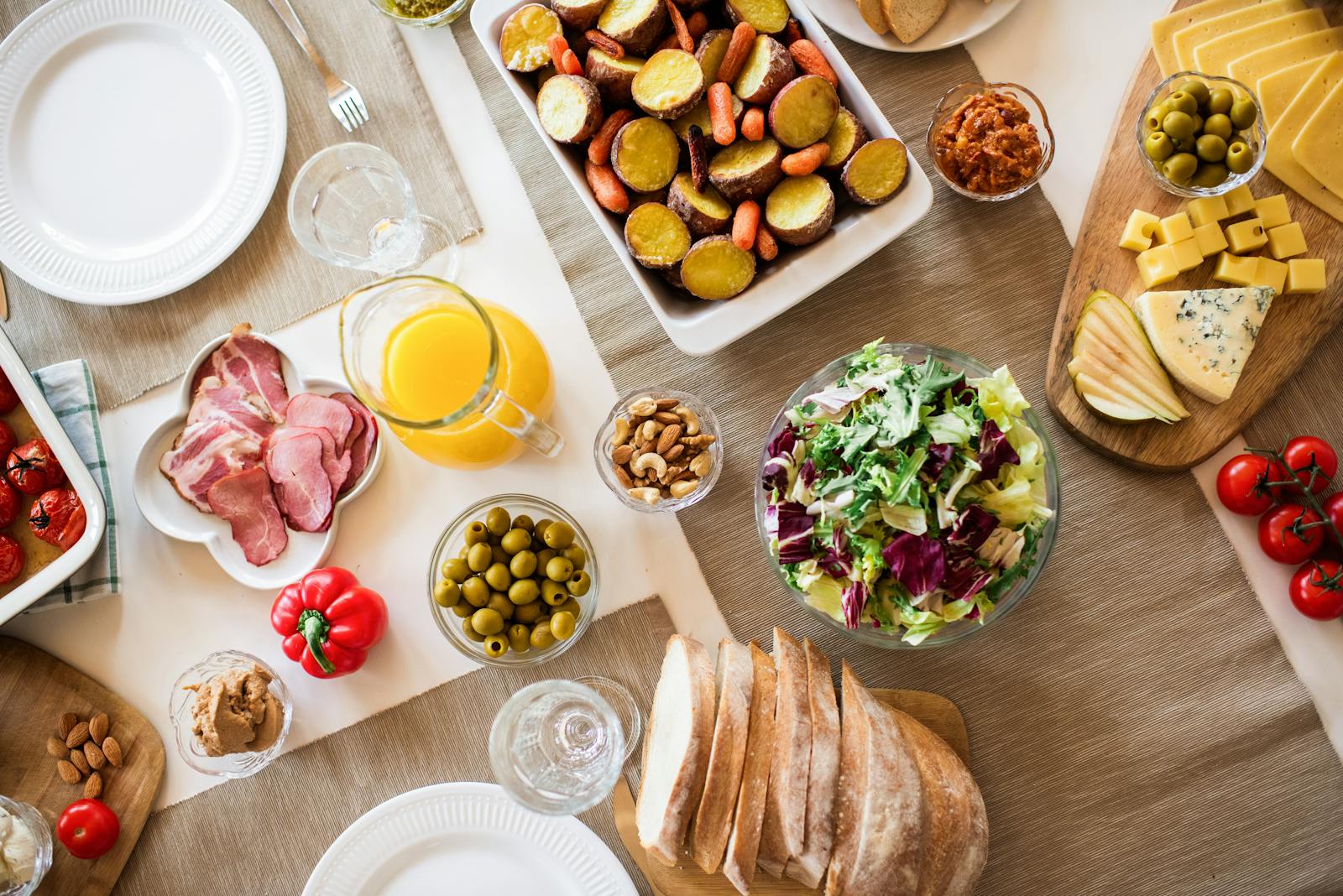

Alix PurrSave room for dessert. Trust us. Pie photo: Element5 Digital via Pexels
If You Have Family, Go Be With Them.
Hug them. Argue about the stuffing. Tell them the real story of 1621 over dessert. Being with the people who love you is the whole point.
And if you don’t have family this year, whether by loss, distance, or a door that closed, we see you. Our doors are open, and not just on Thanksgiving. They’re open all year round, for you.
Pull up a chair. You’re family here.
Want to help us feed people and animals all year? Visit The Cat House Foundation Foundation.
Alix Purr, Unfolded
Tap the cover to open the gatefold.
PurrOpen ⟷
The accounts, in their own words
Every historical line in this issue is drawn from these first-hand accounts and contemporary chronicles. Links go to readable copies and translations held by libraries and archives; the words are the original authors’.
- Edward Winslow, letter of December 11, 1621, printed in Mourt’s Relation (London, 1622), and William Bradford, Of Plymouth Plantation (written c. 1630–1650)
- Plymouth colonists’ journal for March 1621, in Mourt’s Relation (London, 1622): transcribed excerpts
- Álvar Núñez Cabeza de Vaca, La Relación (Zamora, Spain, 1542)
- Francisco Vázquez de Coronado, letter to Viceroy Mendoza from Cíbola, August 3, 1540
- Francisco López de Mendoza Grajales, memoir of the 1565 voyage to Florida
- Samuel de Champlain, Les Voyages (Paris, 1613), Plymouth Harbor passage
- John Smith, A Description of New England (London, 1616)
- Thomas Dermer, letter of 1619, printed in Purchas His Pilgrimes (London, 1625)
- Thomas Morton, New English Canaan (Amsterdam, 1637)
- John Easton, A Relation of the Indian War (1675), recording Metacom’s words
- Hernando del Pulgar, Crónica de los Reyes Católicos (15th century)
Food photography courtesy of Pexels. Alix Purr photography © The Cat House Foundation.
Photography courtesy of Pexels: Wendy Wei, RDNE Stock project, Rufina Rusakova, Airam Dato-on, cottonbro studio, kaboompics, Alexy Almond.